Choosing the wrong species for a furniture project creates problems that no amount of skilled joinery can correct. An unstable timber in a humid environment pulls joints apart; an overly hard wood dulls tools and slows progress; a grain pattern that looks attractive as a plank becomes visually chaotic once cut and assembled. This guide covers the species most accessible to furniture makers working in Poland and their practical characteristics.
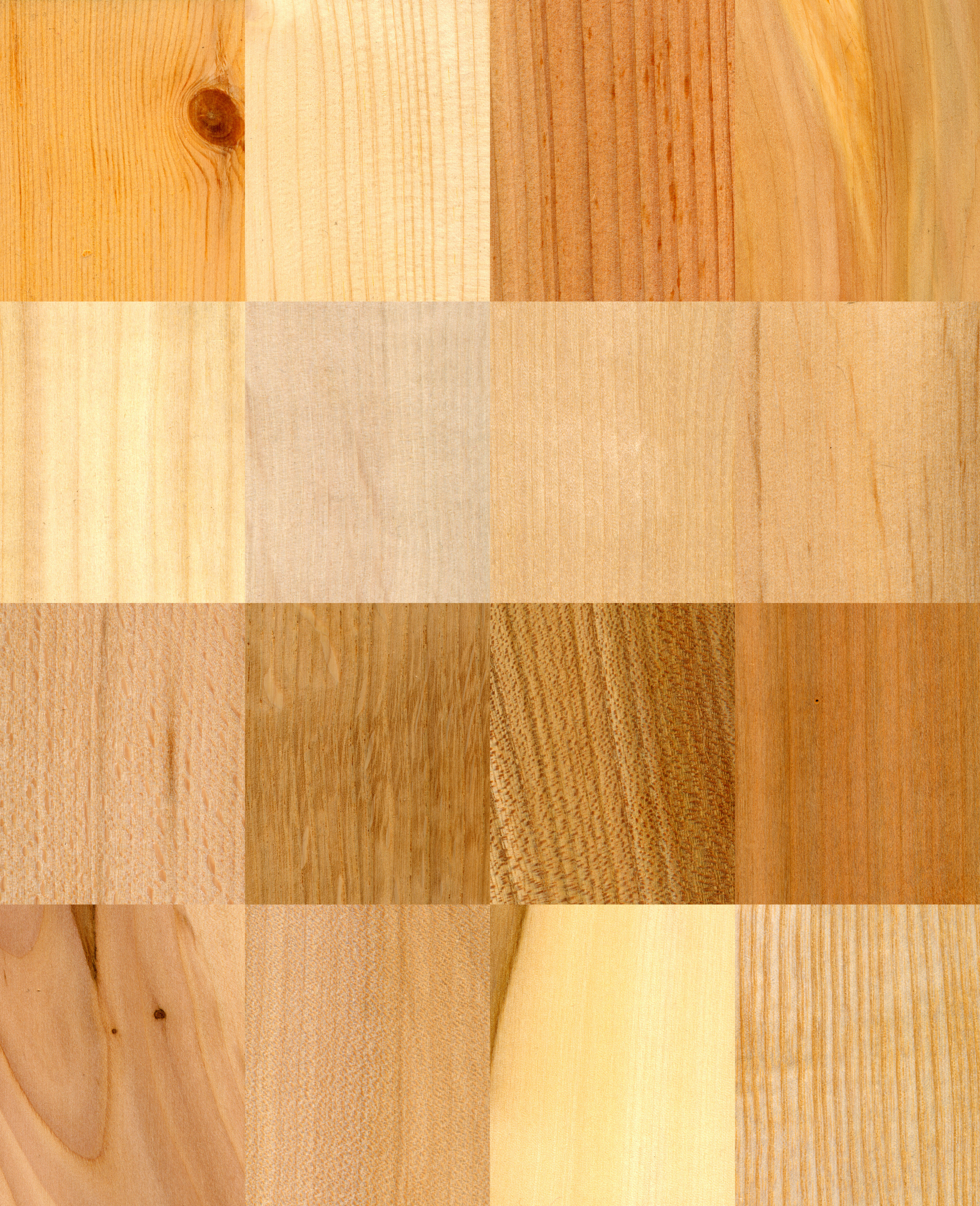
Hardwood versus softwood: the terminology
The botanical distinction between hardwood (angiosperms — flowering trees) and softwood (gymnosperms — conifers) does not directly predict hardness. Balsa is a hardwood but is lighter than most softwoods; yew, a conifer, is denser than many broadleaf species. For furniture purposes, hardwoods tend to have more complex cellular structures that produce interesting figure and generally resist wear better than conifers — but there are many exceptions worth understanding individually.
Oak (Quercus robur, Q. petraea)
European oak is the default furniture hardwood across Poland and most of Central Europe. It is widely available from Polish sawmills, typically at moisture contents between 10% and 15% for kiln-dried boards. The Janka hardness of European oak is approximately 1120 lbf (4,980 N), which makes it resistant to denting while still workable with hand tools when properly sharp.
Oak's most distinctive feature is its medullary rays — the radial cell structures that produce the characteristic fleck pattern when the timber is quarter-sawn (cut with the growth rings roughly perpendicular to the face). Quarter-sawn oak moves less across its width in response to humidity changes than flat-sawn oak, making it the preferred cut for table tops and frame-and-panel doors where dimensional stability matters.
White oak contains tyloses — cellular structures that block the vessel pores — making it suitable for liquid-tight cooperage. Red oak lacks tyloses. For furniture, both are usable; the colour difference is subtle, with red oak carrying a slight pink undertone.
Ash (Fraxinus excelsior)
Ash is harder than oak (around 1320 lbf Janka) and notably more flexible, which is why it has historically been used for tool handles, chair legs, and sports equipment. The grain is typically straight, making it easier to rip on the table saw without the tendency for the wood to close on the blade that curved-grain timber sometimes causes. The contrast between early wood (porous, lighter) and late wood (denser, darker) gives ash a strong, clear figure that some makers prefer to oak's subtler medullary ray pattern.
Ash availability in Polish sawmills is good, though emerald ash borer (Agrilus planipennis), now present in parts of Poland, may affect supply in certain regions over the coming decade. Current FSC-certified sources remain the recommended procurement route.
Beech (Fagus sylvatica)
Beech is the dominant furniture timber in Central European workshop tradition. It is uniform in texture, relatively cheap, machines cleanly, and glues well. Its main disadvantage is movement — beech is among the more dimensionally unstable European hardwoods in response to humidity changes, with a tangential movement of approximately 11.8% from green to oven-dry. For solid-timber furniture in heated Polish interiors, where the relative humidity can drop to 35–40% in winter, this movement must be accommodated in the construction rather than resisted.
Beech is the standard species for workbench tops in European workshops. It is also the most common timber for bentwood furniture because its fibres tolerate steam bending without fracture at radii that would split most other European hardwoods.

Walnut (Juglans regia)
European walnut (Juglans regia) is the premium furniture timber of Central Europe, distinct from the American black walnut (Juglans nigra) that dominates North American markets. The colour is a warm grey-brown to chocolate brown, with the heartwood often showing streaks of purple and grey that disappear gradually in UV light. Carpenters who prefer a stable, dark-toned wood without needing to apply a stain typically choose walnut for drawer fronts, cabinet doors, and small decorative pieces.
Walnut is moderately hard (approximately 1010 lbf Janka for European species) and works easily with both hand and machine tools. It glues reliably and takes finish well. The main constraint is cost and availability: walnut from Polish and neighbouring Czech sources is considerably more expensive than oak or beech on a per-cubic-metre basis, and board widths are often narrower, requiring more planning around figure and yield.
Pine (Pinus sylvestris)
Scots pine is the most abundant Polish timber and is available green (freshly cut), air-dried, and kiln-dried from hundreds of sawmills. It is a softwood with a Janka hardness around 380 lbf — significantly softer than the hardwoods above — and shows dents from normal use. Pine furniture requires either a protective surface finish (lacquer, hard wax oil) or the acceptance that the surface will record use over time.
Pine's working properties are straightforward: it cuts cleanly along the grain, planes easily, and glues well with standard PVA adhesives. The resin canals in pine can bleed if the wood is not fully dried or if heat is applied during finishing; sealing with shellac before applying a water-based topcoat prevents resin from interfering with adhesion.
Moisture content and movement
All timber moves in response to changes in ambient relative humidity. The equilibrium moisture content (EMC) of wood in a centrally heated Polish interior is typically 8–10% in winter and 12–14% in summer. Kiln-dried timber from a Polish supplier is usually delivered at 10–15% moisture content. If the delivered moisture content is significantly above the expected EMC, the timber should be stacked with stickers (spacers) in the workshop and allowed to acclimatise before cutting.
Tangential movement (across the growth rings, as seen in flat-sawn timber) is roughly twice the radial movement (perpendicular to the rings, as in quarter-sawn). A 300 mm wide flat-sawn oak panel can be expected to move approximately 3–4 mm across its width across a full seasonal humidity cycle in a Polish interior. Frame-and-panel construction accommodates this movement; solid glued-up panels do not resist it — they move as a unit, which must be considered when attaching them to a frame.
Where to source timber in Poland
Poland has a well-developed sawmill network, particularly in the Carpathian and Mazovian regions. State forests (Lasy Państwowe) manage a significant portion of the national timber stock, and certified timber from these forests carries FSC or PEFC documentation. For hardwoods, specialist hardwood dealers in Kraków, Warsaw, and Wrocław stock wider selections of species and drying grades than general builders' merchants. Ordering directly from a sawmill in the correct species and moisture content eliminates the risk of purchasing timber that has re-absorbed moisture during outdoor storage at a yard.
Last updated: 1 April 2026